
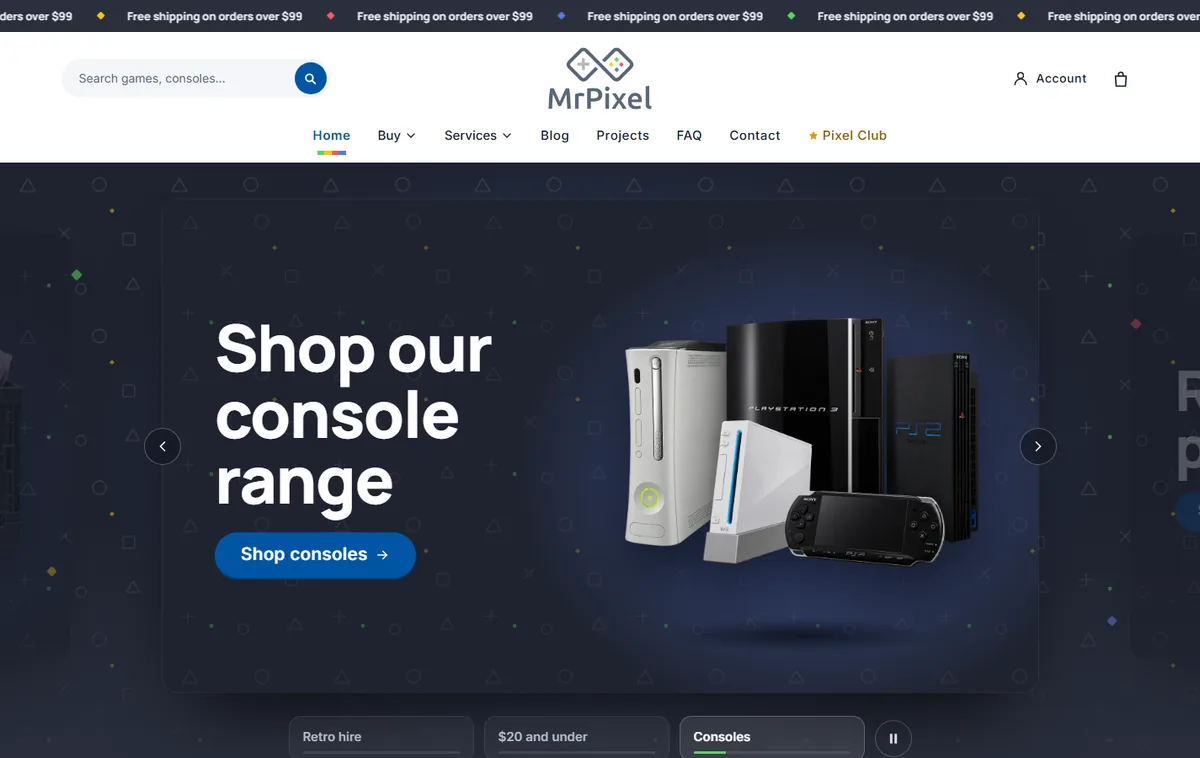
Search sits at the top left of every page, so shoppers who know the title they want can skip the menus.
Buy and Services open into their own menus, and the Pixel Club gets a star of its own so it's easy to find.
Full-width slides, each pairing one offer with a cut-out product shot, with arrows to move between them.
Each slide has a tab with a bar that fills while it plays, and a pause button stops the motion for anyone who wants it still.
Tap a numbered point, on the image or here, to see why it's there.
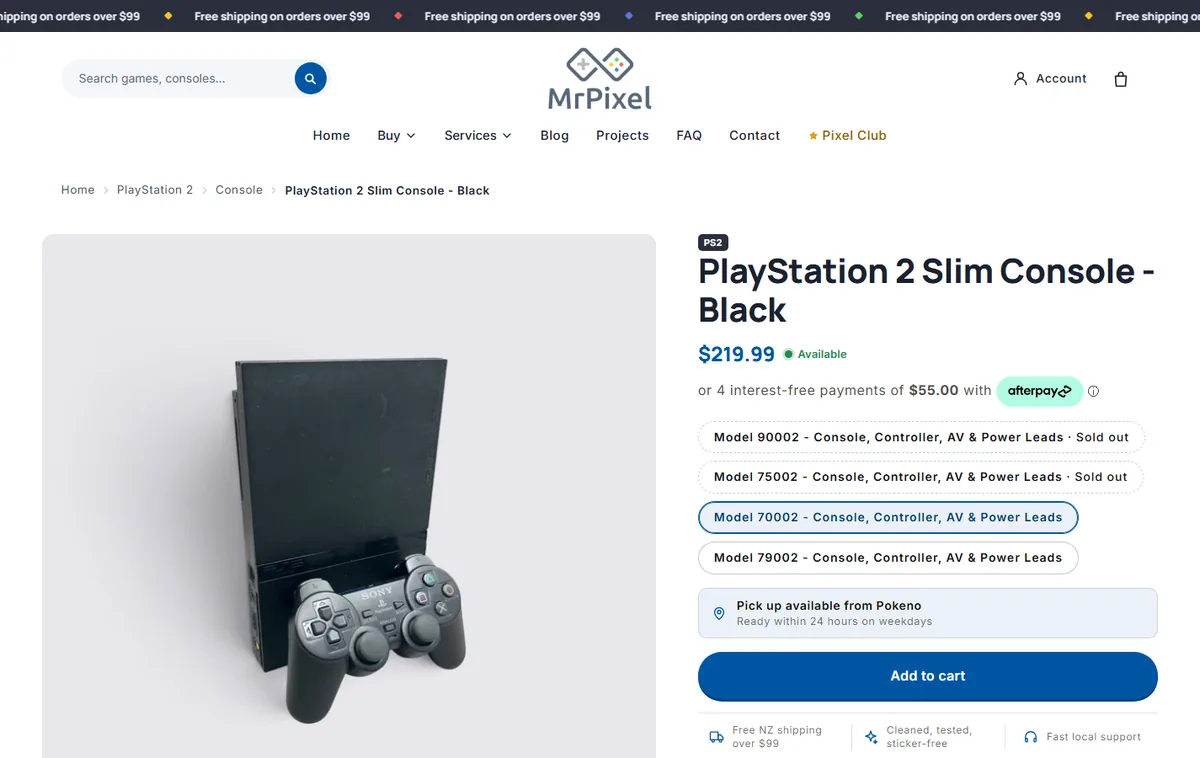
A large, rounded photo frame on a soft grey backdrop, so buyers can judge a pre-owned item's condition.
Shows the platform and category the item belongs to, with a link back to each. Shoppers can step across to more PlayStation 2 stock, and search engines get a clear map of the catalog.
Price and stock status sit side by side at the top, so a shopper knows straight away whether the item is ready to buy.
Each model is its own option. Sold-out models stay listed and say so, so shoppers see the whole range and never land on a dead end.
Pickup from Pokeno, ready within 24 hours on weekdays, shown just above Add to cart so local buyers see it before they check out.
Free NZ shipping over $99, cleaned and tested stock and fast local support, in one line under Add to cart.
Tap a numbered point, on the image or here, to see why it's there.
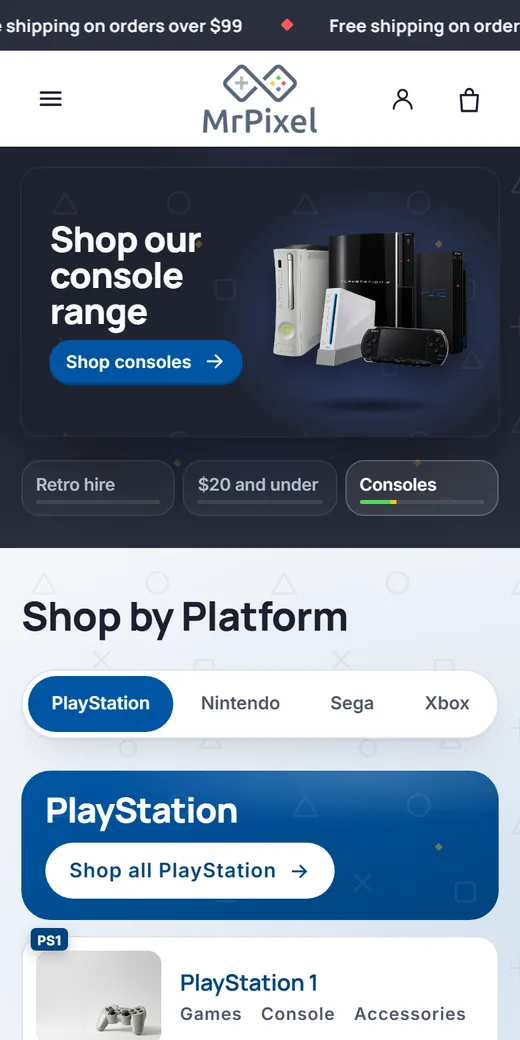
Free shipping on orders over $99 runs across the top of every page. The growth plan brought the threshold down from $199.
Slides at the top, one of them leading with the console range, since a console is often the purchase that games and accessories follow.
Retro hire, $20 and under and Consoles sit as tabs under the slides, each with a bar that fills while its slide plays. One tap jumps to the one a shopper wants.
PlayStation, Nintendo, Sega and Xbox as tabs. One tap swaps the consoles below, so shoppers go straight to the systems they own.
Each console gets a row with straight links to its games, consoles and accessories, under a Shop all banner for the whole platform.
Tap a numbered point, on the image or here, to see why it's there.
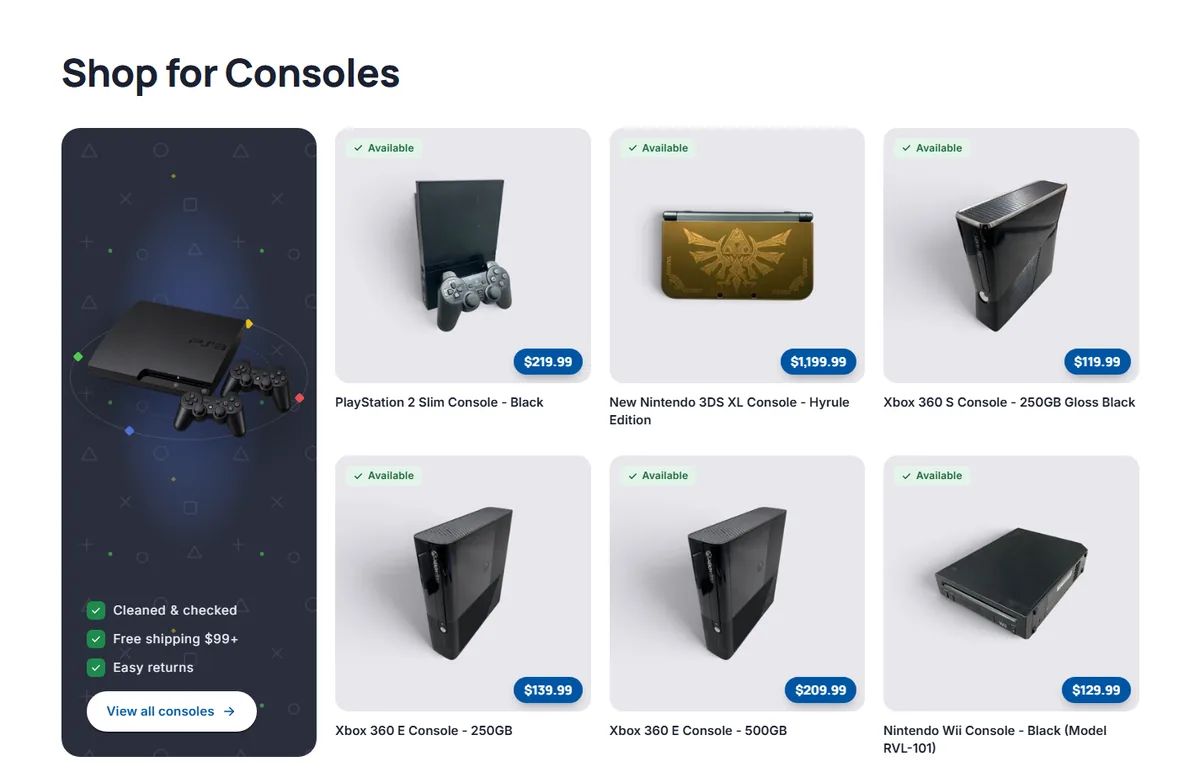
Consoles get their own homepage section. They're often a customer's first purchase, and the games and accessories come after.
Each card shows its price and an Available chip, so shoppers click through to things they can buy today.
A panel beside the grid repeats the store's promises: cleaned and checked, free shipping over $99 and easy returns.
One button to the full console collection, for anyone who wants to browse the lot.
Tap a numbered point, on the image or here, to see why it's there.